Mustard-Roasted Pork Tenderloin
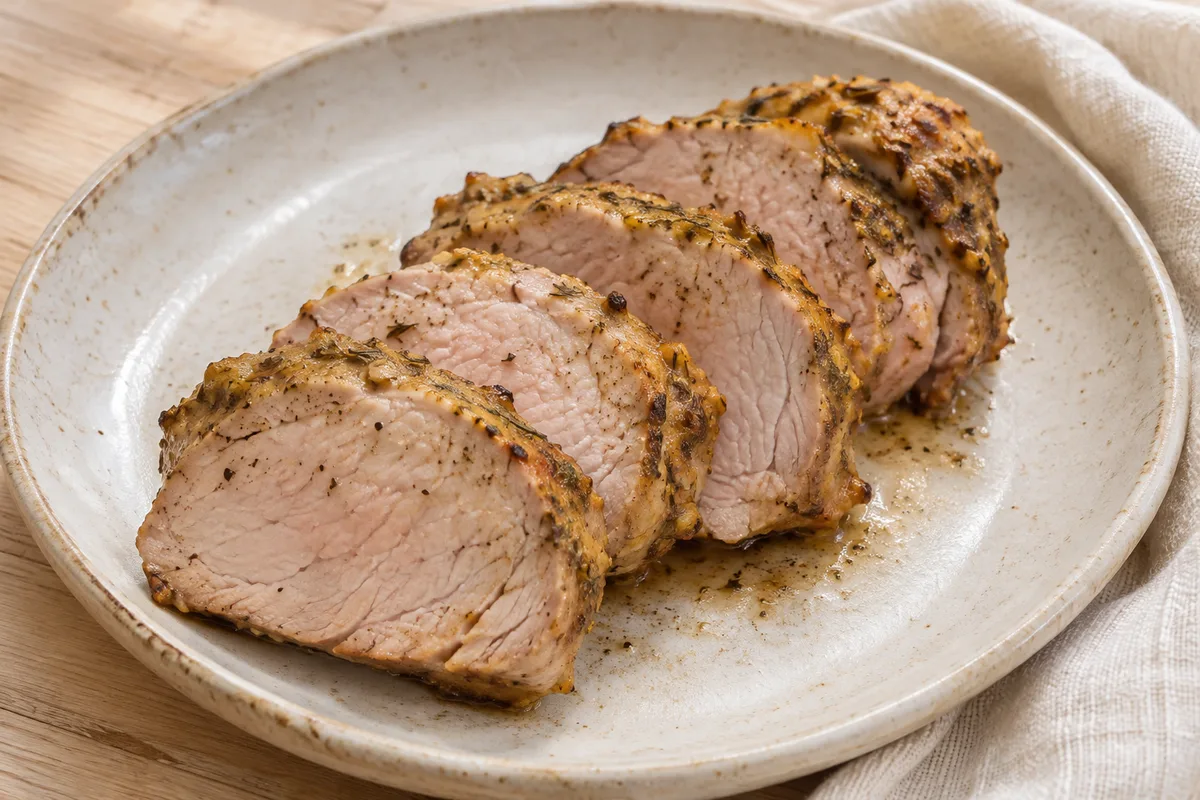
A mustard and garlic coating gives a single pork tenderloin a savoury crust for slicing.
- Prep
- 15 min
- Cook
- 30 min
- Yield
- 4 servings
“Made without” describes this ingredient list only. Packaged ingredients vary, so always check labels.
Before you start
Equipment, yield and timing notes below describe the original 4-serving batch.
- Use tenderloin rather than pork loin: the cut and thickness affect cooking time. No claim of a regional traditional preparation is intended.
Selected yield: 4 servings. Prep: 15 min · Cook: 30 min.
Make it
- Heat the oven to 200°C / 400°F. Line a 23 × 33 cm metal roasting pan with foil.
- Pat the tenderloin dry with disposable paper towel. Tuck its thin tail underneath so the thickness is more even, and place in the pan.
- Mix mustard, oil, garlic, thyme, salt and pepper in a small bowl. Spread over the pork, then wash hands and clean equipment that touched raw meat.
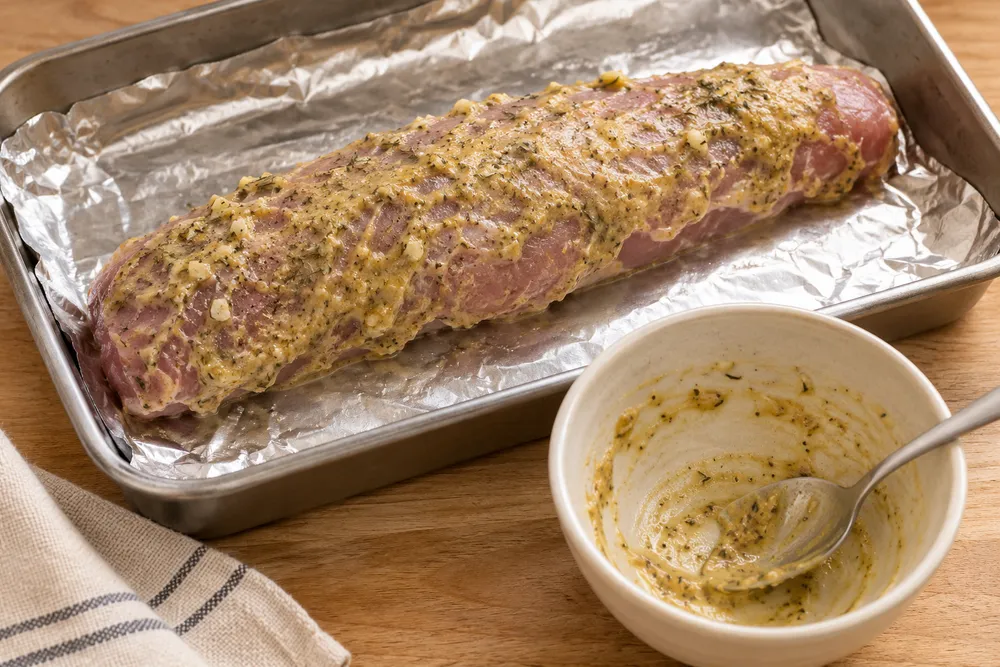
Step 3 · Generated process illustration - Roast for about 25–35 minutes. Begin measuring after 20 minutes with a digital thermometer inserted into the thickest centre.
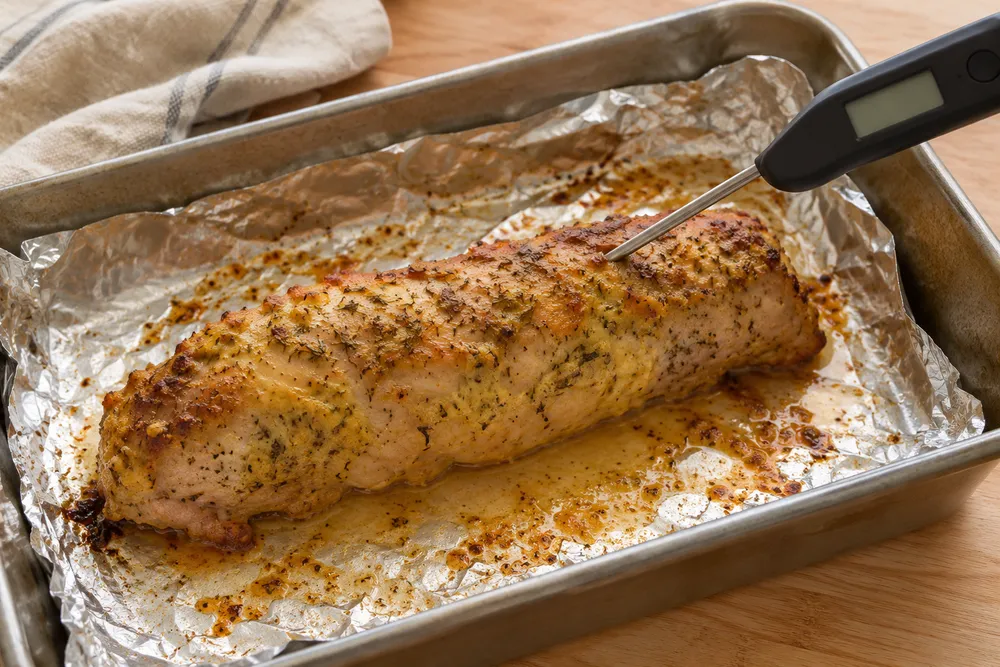
Step 4 · Generated process illustration - Continue roasting until the pork reaches 71°C / 160°F. The temperature, not the estimated time or colour, determines doneness.
- Move to a clean cutting board and rest for 5 minutes before cutting into 1.5 cm slices. Divide among four plates.
Swaps & variations
Amounts below are for the original 4-serving batch.
- Wholegrain mustard can replace Dijon by weight for a coarser coating.
- Use 1 teaspoon garlic powder in place of fresh garlic.
Keeping leftovers
Refrigerate promptly in shallow containers within two hours, loosely covered until cold, then cover. Keep at 4°C / 40°F or colder and use within 2–3 days. Reheat leftovers to 74°C / 165°F; bring soups to a full rolling boil while stirring.